
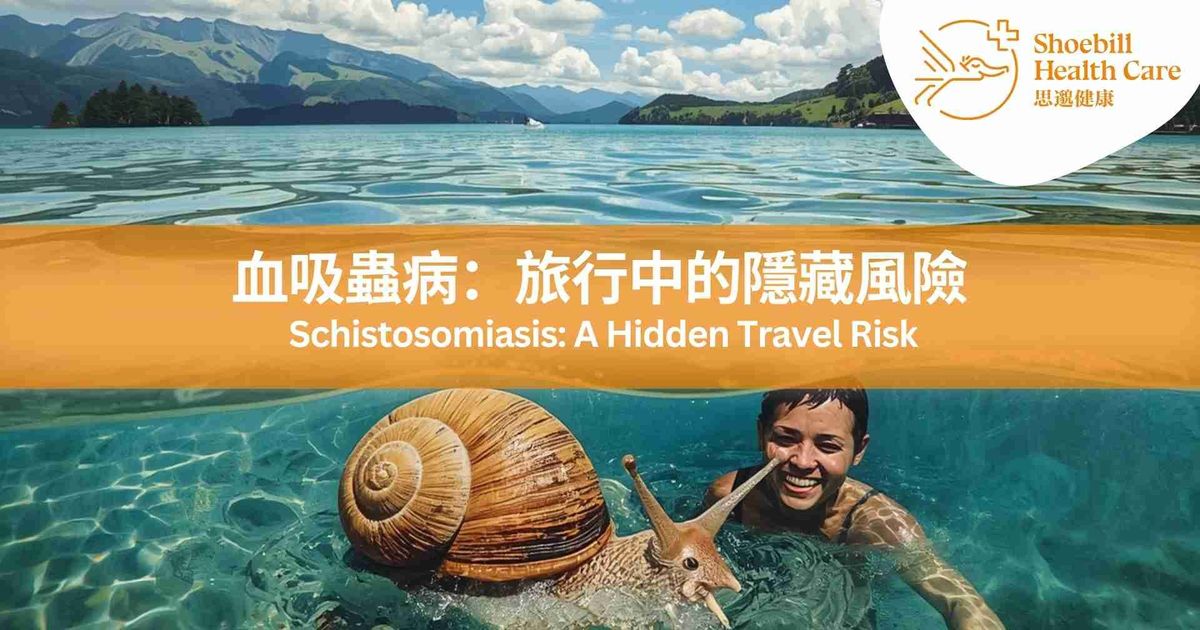
When planning a trip, most of us pay close attention to food hygiene, worried that eating the wrong thing might upset our stomachs. But beyond food, water-based activities also come with hidden health risks. This time, let's talk about an infectious disease closely linked to freshwater contact — Schistosomiasis.
What is Schistosomiasis? (A Simple Quick Guide)
Schistosomiasis is a disease caused by parasitic worms. The most common way to get infected is through skin contact with contaminated freshwater — just swimming, wading, or even walking barefoot through lakes, rivers, or ponds can be enough for the larvae to burrow through your skin. In rare cases, infection can also occur by drinking or eating something that has come into contact with contaminated, untreated water.
It's rarely heard of in Hong Kong, because the disease is mainly found in these popular travel destinations
- Africa: Almost the entire continent's freshwater lake regions, including the famous Lake Victoria and Lake Malawi. Travellers planning to see the Great Migration or any activities involving freshwater contact should be particularly cautious.
- Southeast Asia: The Philippines, Sulawesi in Indonesia, northeastern Thailand, Laos, Cambodia — especially the Mekong River Basin.
- South America: Parts of Brazil, Venezuela, and a few other areas.
- Middle East: Certain river basin regions.
Why are travellers particularly vulnerable?
Many travellers find it hard to resist a refreshing dip when they come across a stunning waterfall or a crystal-clear lake. A local guide might reassure you, saying, "It's safe, we swim here all the time." The reality is that many locals are already chronically infected, so they may not show obvious symptoms, whereas travellers with no prior exposure are far more susceptible.
Common high-risk scenarios
- Lakes that look crystal clear: Eggs enter the water through the urine or faeces of infected people. The larvae then develop inside a specific intermediate host — the freshwater snail — before being released back into the water. Clear water absolutely does not mean parasite-free water.
- Popular backpacker spots: Take Lake Malawi in Africa as an example. The scenery is breathtaking, yet it is also a well-known high-risk area for Schistosomiasis.
- Adventure and water activities: Canoeing, white-water rafting, or even just washing your hands or face at the riverbank can all lead to infection.
What symptoms should you look out for?
The incubation period and progression of this disease can be tricky. Early symptoms often mimic common skin allergies or a cold, so it is worth paying extra attention.
- Phase 1 (hours to days after exposure): A red, itchy, spotty rash may appear where the larvae penetrated the skin, much like a mosquito bite. It usually fades on its own after a few days, so most people dismiss it. This reaction is similar to swimmer's itch.
- Phase 2 (around 4 to 6 weeks later): As the larvae mature into adult worms inside the body, a person may develop a fever, chills, muscle aches, and a dry cough. This phase is called Katayama fever, and it is very easily misdiagnosed as the flu or typhoid.
- Phase 3 (long-term chronic): Without treatment, the adult worms can live in your blood vessels for years, continuously laying eggs. These eggs can accumulate in the intestines or bladder, potentially leading to long-term abdominal pain, diarrhoea, or blood in the stool or urine.
Can Schistosomiasis be treated?
If you had any contact with freshwater during your travels and later notice any of the above symptoms, see a doctor as soon as possible and be sure to tell them about your travel history so they can arrange the right tests.
Travel tips: how to avoid Schistosomiasis
If your destination is an area where Schistosomiasis is common and you plan to take part in water activities, your risk naturally goes up. Here is what you can do:
- Avoid contact with freshwater: In affected regions, avoid swimming or wading in lakes, rivers, and ponds.
- Make sure your water is safe: Always boil drinking water first, or stick to water from a verified clean source.
- Dry off quickly after contact: If you are briefly exposed to freshwater, rub your skin vigorously and quickly with a towel right away. This may help reduce the chance of larvae penetrating the skin, but never rely on this alone as your only protection.
Afterword
When you plan a deep-dive trip, especially to places like Africa or Southeast Asia, be mindful of more than just food hygiene — stay very alert around freshwater sources. Those stunning lakes and riverscapes are best admired from a distance, not up close in the water.
If you are unsure about the risks at your destination, or have other travel health needs (like antimalarial medication or vaccines), you are welcome to book a pre-travel consultation.